
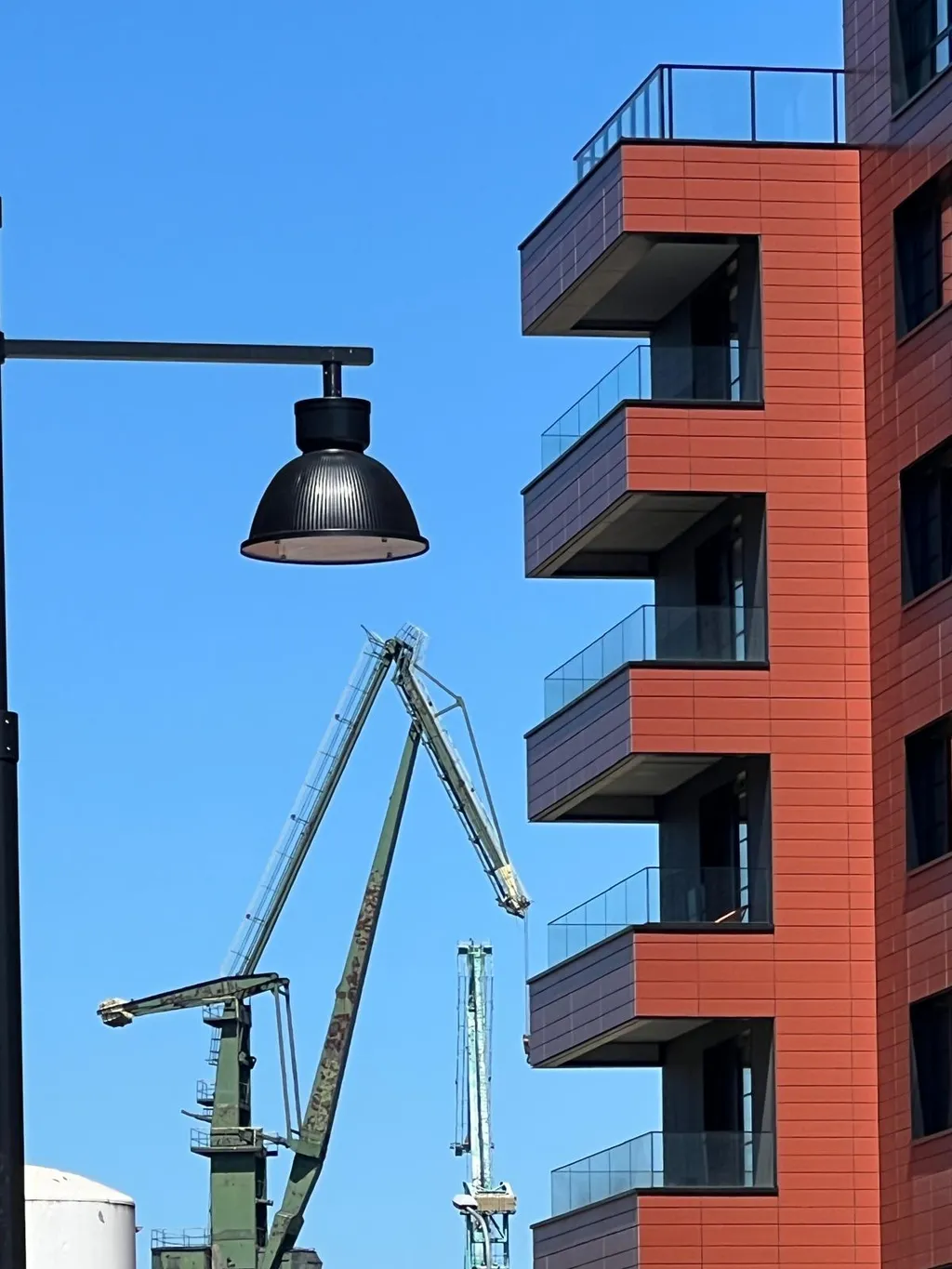
Gdansk Shipyard & ECS — A Walk Through Young Town
DOKI Gdansk: Plac Solidarności, ECS, Szlak Stoczni Cesarskiej & Montownia food hall. Experience history of August 1980 and why stay overnight at DOKI, not just visit briefly.
Stocznia Gdańska is not just another spot on the tourist map of Gdansk, Poland — it’s a place where one of the most important stories of 20th-century Europe unfolded. Today, in the district known as Młody Miastem (Young Town), you can spend an entire day — from museum visits to historic cranes and lunch in the hall where ships were once assembled.
History in a Nutshell — Why This Place Matters
In August 1980, workers at the Gdańsk Shipyard launched a strike that led to the signing of the August Agreements and the creation of NSZZ Solidarność—the first independent trade union in the Eastern Bloc. This event sparked a process that, within a decade, brought political change across Central and Eastern Europe. The Gdańsk Shipyard is therefore often called the cradle of Solidarity—and this label isn’t just for show.
Earlier, in December 1970, tragic events unfolded at the shipyard—workers’ protests were violently suppressed. Their memory is honored by a monument on Solidarity Square, one of the city’s most recognizable symbols.
For many visitors, it’s precisely this context—the events of 1970 and 1980 combined—that gives a walk through Młody Mieście its weight, unlike any other district in Gdańsk. It’s not just a neighborhood with beautiful post-industrial architecture—this is a place where history is tangible at every step—from preserved cranes to street names.
Europeana Solidarity Centre — practical info
ECS (Europeana Solidarity Centre) opened in 2014 in a building with a distinctive, rust-colored facade reminiscent of shipyard steel, right next to the historic Gate No. 2. It’s one of Poland’s most important museums—its permanent exhibition traces history from the strikes of the 70s and 80s through the systemic transformation.
Practical tip: set aside at least 2–3 hours. The exhibition is rich in content, and it works best with an audio guide—without it, you may rush through the rooms and lose the context that ties the entire narrative together. If history interests you, you can easily stay longer.
The ECS building itself is worth visiting for its architecture alone—the rooftop viewpoint offers a panoramic view of the former shipyard area, including the iconic cranes visible from afar. It’s a great opportunity to take aerial photos of the whole neighborhood before heading back down to street level.
Plac Solidarności and the Monument of Three Crosses
Just in front of the ECS building lies Plac Solidarności with the Monument to the Fallen Shipyard Workers of 1970—three steel crosses rising above the square, one of the first monuments in postwar Poland commemorating victims of communist repression. This is a place worth lingering longer than just for a photo—the historical context makes all the difference.
Next to it, within the preserved section of historic buildings, stands Gate No. 2—one of the gates of the Gdańsk Shipyard, symbolically linked to events in August 1980. It was before such a gate that workers and city residents gathered during the strike days—today it’s a quiet place, but worth pausing for a moment to reflect on what happened here over four decades ago.
Szlak Stoczni Cesarskiej — a walk through the industrial landscape
If you want to see more than just the museum, take the Szlak Stoczni Cesarskiej — a walking trail that runs through the former Gdańsk Shipyard site, past preserved industrial buildings, historic cranes, and facilities that have been closed to visitors for decades. It’s the best way to grasp the scale of this place—experience its history not just by reading about it, but by seeing the physical space where events unfolded.
Montownia — lunch in a former assembly hall
After sightseeing, the best place for lunch is Montownia — a food hall opened in June 2023 in a former ship assembly hall where vessels, including submarines, were once built. Today it hosts nearly twenty food stalls and two bars (Bloop Bar and Tap Bar) under one roof — from Asian cuisine to classic burgers. The industrial interior — exposed structure, high ceilings — has been preserved, so while enjoying your meal you’re still in the same historic space.
Montownia works equally well for a quick lunch between sightseeing stops or a longer evening out — in warmer months additional outdoor seating is available, and the variety of cuisines means a group with different tastes can easily find something for everyone under one roof. Full list of vendors, opening hours, and both bars → Montownia — food hall guide.
Sołdek przy Ołowiance — the first Polish iron ore carrier
A little further along the Ołowianka waterfront, moored at the quay, is the Sołdek—the first ship built in post-war Poland, launched in 1948 as the country’s first iron ore carrier. Today it’s a museum ship that you can tour inside—a perfect complement to a visit to the ECS, offering another side of the shipyard’s history: not just strikes and politics, but also the real work and production that drove this part of the city for decades.
The walk from the ECS to the Sołdek is a natural extension of your route—along the waterfront with views of the Motława river on one side and the shipyard buildings on the other. It’s a great way to end a day of sightseeing with a peaceful stroll, rather than finishing where you started.
Why stay here instead of just visiting for a day
Most tourists visit the Shipyard and ECS as a checklist item, return to the Main Town, and stay there. That’s sensible—but it misses something important: DOKI, a district built on former shipyard grounds, offers a completely different evening rhythm than the Main Town.
Evenings in DOKI are noticeably quieter than the crowded bars near Targ Węglowy, while everything we’ve mentioned above—ECS, Plac Solidarności, Montownia, and strolling along the Motława river—is within a 15-minute walk from the apartment. You don’t need to take a tram for hours to get here and return to another part of town—you have it all practically at your doorstep throughout your stay.
This also means you can return to ECS or the Imperial Shipyard Trail the next day without planning another trip—just step out of the apartment. For guests who truly want to understand this place rather than just tick it off a list, that proximity matters.
The DOKI complex features an elevator and underground garage parking—an important practical detail if you’re arriving with luggage or by car. Check-in is contactless via the Tedee app, so settling in after a full day of sightseeing takes literally minutes.
If you’re planning a longer stay and want to visit both the historic Old Town and the Main Town on the other side of the Motława river, DOKI is also a good starting point—walking along the embankment to Long Market takes about 20 minutes and is one of the most scenic walking routes in Gdansk. Choosing to stay closer to the Main Town instead means giving up the peaceful evenings that DOKI offers. Learn more about the district itself, its character, and who it’s best suited for on the location page → DOKI Apartments.
Which apartment to choose at DOKI
For guests who want all this history and gastronomy within easy reach, we recommend:
→ Apartment in a Gdańsk Shipyard atmosphere — the name is no coincidence; the building is located right in the heart of the post-shipyard landscape.
→ DOKI Apartment with two bedrooms — more space, same walking access to ECS and Montownia.
→ DOKI Apartment with two bedrooms near foodhall — literally a few minutes from Montowni.
If you’d like to compare DOKI with other districts where we have apartments, check out our guide → Where to stay in Gdansk.
Planning a visit focused on the history of the Gdańsk Shipyard and ECS? Write to our concierge — we’ll recommend the best sightseeing order and tailor your DOKI apartment stay to your travel plans.
Frequently asked questions
- How much time should I allocate for visiting the ECS?
- Allow at least 2–3 hours for the permanent exhibition at the European Solidarity Centre alone. The audio guide really makes a difference—exhibits are rich in content, and historical context greatly enhances understanding of each room, especially if you're not deeply familiar with the history of August '80.
- What is the Imperial Shipyard Trail?
- The Stoczni Cesarskiej Trail is a walking route through the former Imperial Shipyard, passing by historic industrial buildings, cranes, and structures linked to Gdańsk's shipbuilding history. It’s a great way to see the post-industrial landscape up close, beyond just the ECS.
- Where to eat near the Gdańsk Shipyard?
- Montownia is a food hall located in a former assembly hall, featuring over a dozen food stalls under one roof—from Asian cuisine to classic burgers. It's just a few minutes' walk from DOKI apartments, making it a natural choice for lunch or dinner after sightseeing.
- Why is it better to stay at DOKI rather than just visiting the Gdańsk Shipyard for one day?
- DOKI is quieter in the evenings than the Main Town, and at the same time everything—ECS, Plac Solidarności, Montownia, Motława river embankment—is within walking distance. Instead of traveling here for a few hours and returning to another district, you have this entire area practically right outside your door throughout your stay.
Help me book an apartment
The AI concierge matches an apartment to your plans — dates, party size, district. Replies in seconds.
Apartments that fit this stay
.webp)
Apartament w klimacie stoczniowego Gdańska
- 1 bedroom
- 2 beds
- 4 guests
- 51 m²
A loft-style apartment with an authentic exposed brick wall — one of the standout addresses in the DOKI complex by the Gdańsk Shipyard. 51 m², bedroom with a premium mattress, balcony facing the courtyard and a high standard of finish throughout. In the heart of the Young City: the Shipyard and the European Solidarity Centre within walking distance, Montownia food hall next door, the Motława riverfront a few steps away. Fast Wi-Fi, Smart TV, fully equipped kitchen — for 2–4 guests.
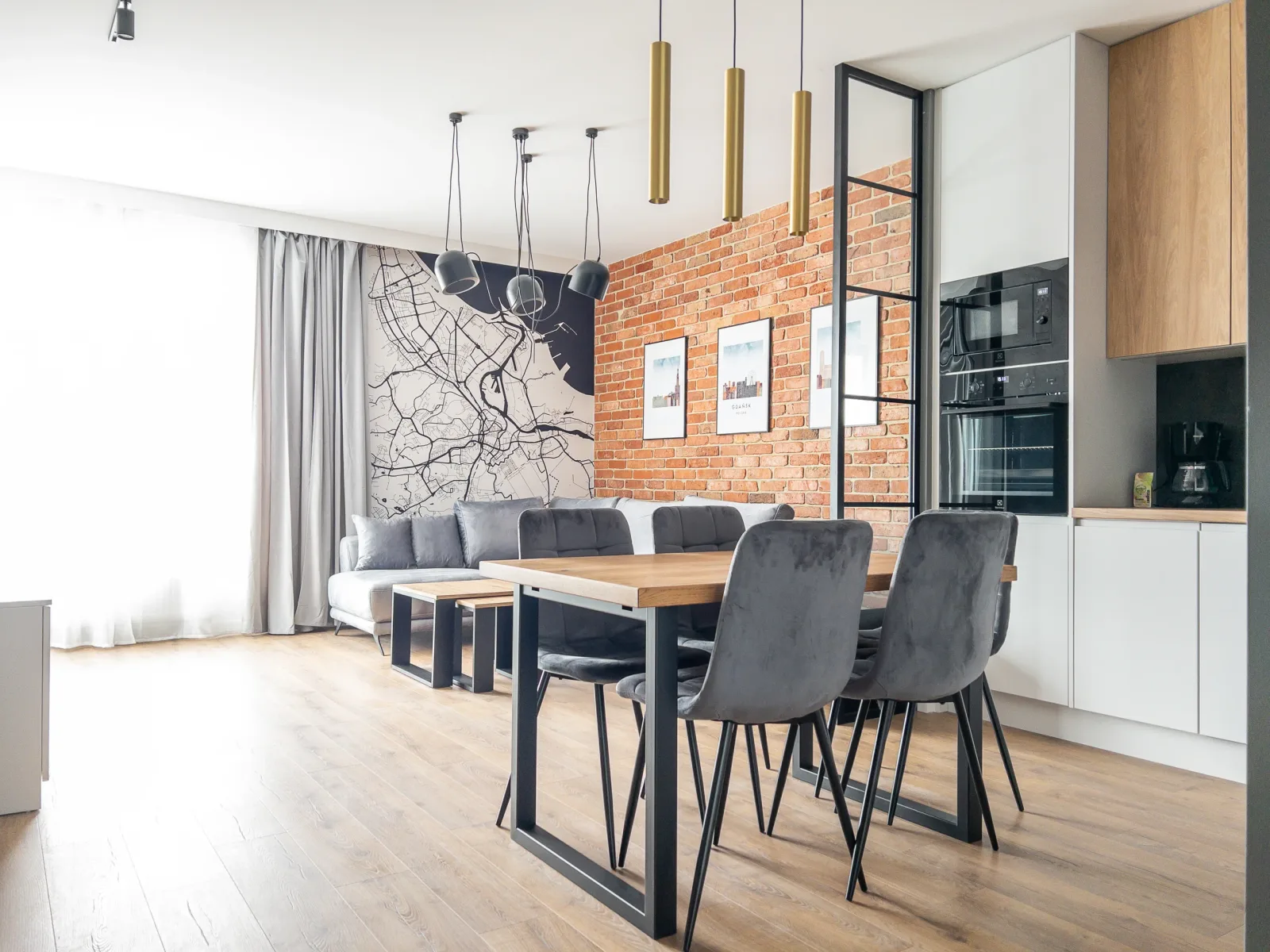
Apartament na dokach z dwiema sypialniami
- 2 bedrooms
- 3 beds
- 6 guests
- 68 m²
A loft-style two-bedroom apartment at DOKI — 68 m², two bathrooms, dedicated workspace, underground garage. Master bedroom with king-size bed, second bedroom with two beds (convertible to double on request). For 2–6 guests. ECS 10 minutes on foot, Montownia within walking distance, tram to the Old Town 15 minutes. Workspace by the window, Shipyard outside — remote work has the right address here.
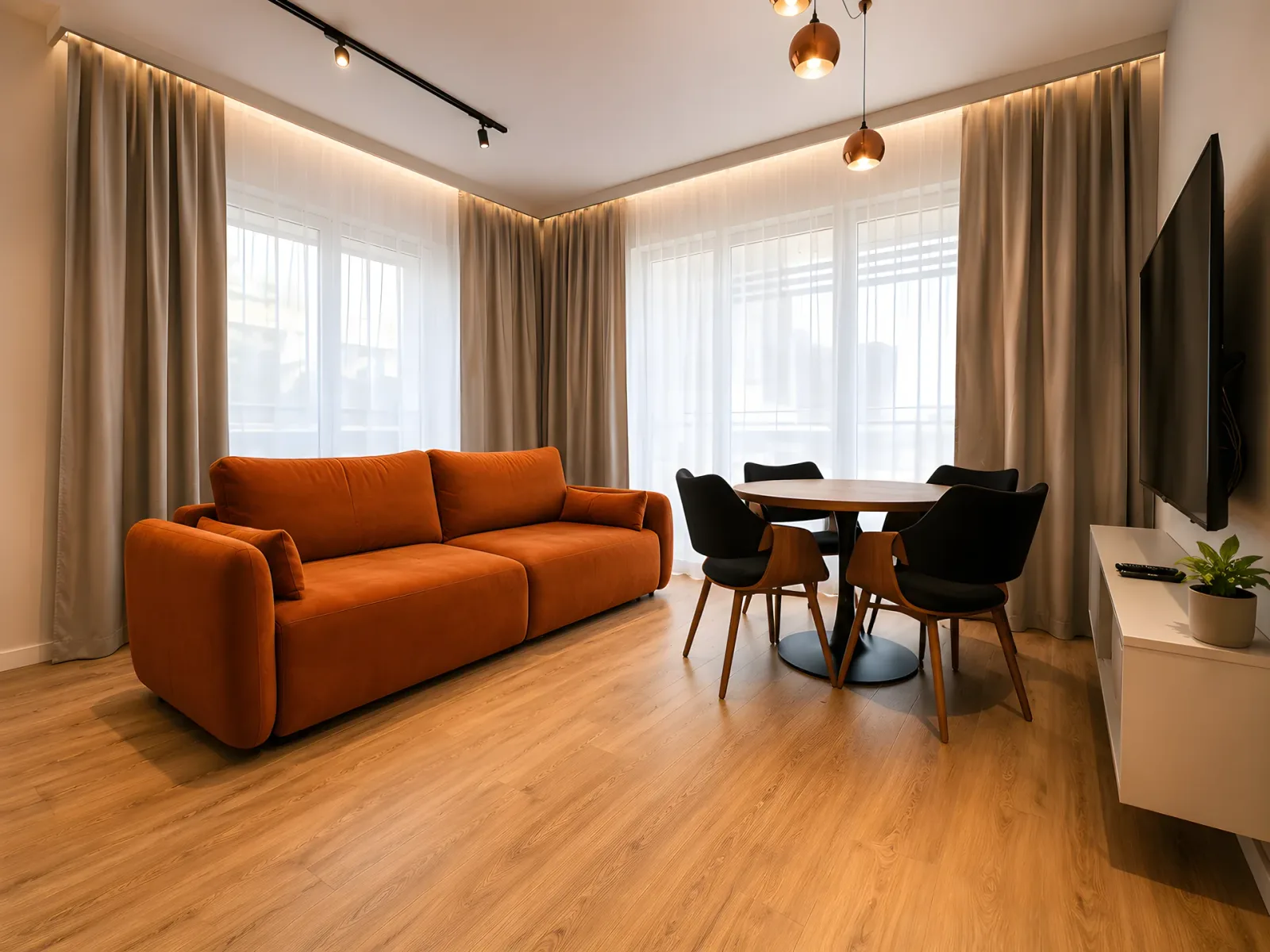
Apartament DOKI z dwiema sypialniami przy foodhall
- 2 bedrooms
- 3 beds
- 6 guests
- 62 m²
A two-bedroom apartment in the DOKI complex — 62 m², balcony with courtyard views, underground garage. Master bedroom with king-size bed, second bedroom with two beds, two bathrooms, fully equipped kitchen. For 2–6 guests. Montownia food hall 50 metres from the entrance, ECS 10 minutes on foot, tram to the Old Town 15 minutes. The dinner question answers itself here.
Liked these topics?
Monthly guide to Gdańsk — events, new places, our apartments and their availability. No spam, just one email.
Related posts
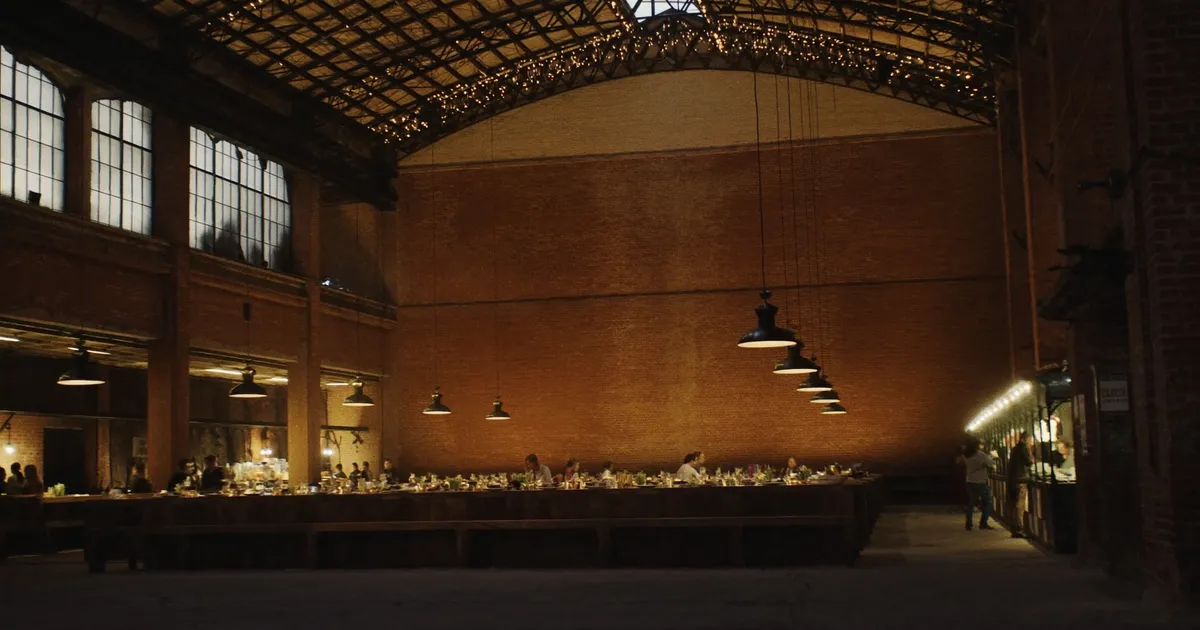
Montownia Gdansk — Guide to the Food Hall at the Shipyard
What to eat in Montownia, Gdansk – local spots, opening hours & distance from DOKI apartments. Practical guide.
Gdansk for a group of friends — what to do and where to stay
Stay in Gdansk with a group – no need to split up across hotels. Explore the Main Town, enjoy activities, and relax in a 2-bedroom apartment for up to 6 people.
Gdansk’s Great Armoury — Renaissance Gem Now Home to Art Academy
Discover the history and architecture of Gdansk’s Academy of Fine Arts, housed in a 1605 building with brick, sandstone, and allegorical sculptures—what you can really see inside.