
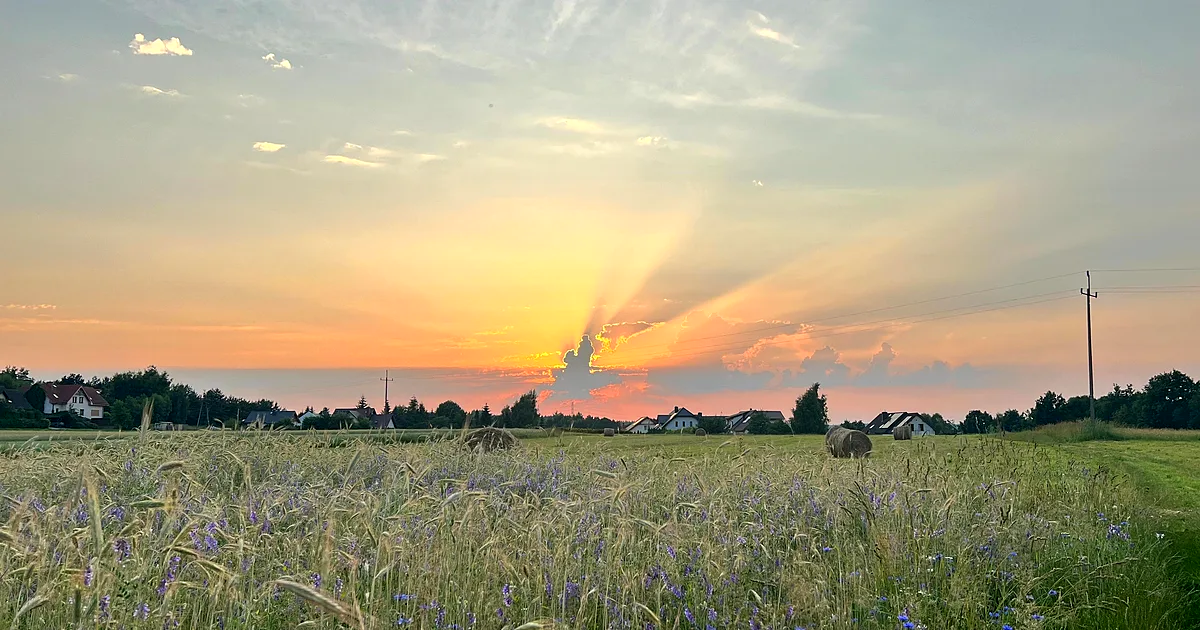
Gdansk to Kaszuby — a one-day trip: what to see, how to get there
Day trip from Gdansk to Kaszuby: drive the loop via Wieżyca and Szymbark or take train to Kartuzy—plus a list of unmissable sights you can’t reach without a car.
Sopot, Gdynia, Hel and Malbork are already mapped out to the minute from Gdansk — but the Kaszubian region still needed its own guide. It’s the only one of the popular day-trip destinations where a car truly changes what you’ll see — without it, you’re limited to a solid trip to Kartuzy; with one, you can fit four different places into a single loop. Below are both options, exact travel times and an honest answer to the question: what can’t you do without a car?
Kaszuby in brief — distance, transport, time on site
| Place | Distance from Gdansk | Travel Time (approx.) | Without a car | Time on site |
|---|---|---|---|---|
| Kartuzy | 34-37 km | 40-46 min | Yes — Polregio train directly | 1-1.5 h |
| Szymbark | approx. 46 km | approx. 44 min | Difficult — no station, temporary replacement bus | 2-3 h |
| Wieżyca | approx. 46-48 km | approx. 47 min | Difficult — same as above | 30-45 min |
| Chmielno | 43-46 km | 44-49 min | Difficult — few local buses | 45 min–1 h |
| Kościerzyna | 57.9 km | approx. 53 min | Partially — train suspended (renovation), replacement bus | 1-1.5 h |
| Wdzydze Kiszewskie | approx. 75 km | approx. 1 hr 10 min | Difficult — no station, infrequent buses | 1.5–2 h |
Why It’s Worth Leaving the Tricity for a Day
Kashubia offers a completely different landscape than the coast—forested moraine hills, glacial lakes, and towns where the name appears in both Polish and Kashubian on the same sign. This is a different pace from strolling through Malbork or relaxing on Hel’s beach—less time spent in one place, more movement between several. It’s also the only major direction where choosing between car and train genuinely changes your plans, not just travel time—our other three directions are covered separately → Day Trips from Gdansk.
Driving Option — Loop Through Four Locations
A car allows you to connect several places without waiting for infrequent local transport. A tested one-day loop from Gdańsk and back:
- Gdańsk → Kartuzy — 34-37 km, approximately 40-46 minutes. Collegiate Church, Kashubian Museum, walking around the town: 1–1.5 hours.
- Kartuzy → Szymbark — 17-18 km, approximately 20-25 minutes. Center for Education and Regional Promotion: 2–3 hours.
- Szymbark → Wieżyca — 2.4 km, a few minutes. Observation tower: 30–45 minutes.
- Wieżyca → Chmielno — distance similar to Szymbark-Chmielno (approx. 18 km), approximately 20-25 minutes. Kashubian Ceramics Museum in Neclów and a walk by the lake: 45 minutes–1 hour.
- Chmielno → Gdańsk — 43-46 km, approximately 44-49 minutes.
Total day, including sightseeing and travel: departure around 8:00, return around 16:30–17:00. If this is too tight a schedule, the easiest adjustment is to skip Chmielno — Kartuzy, Szymbark, and Wieżyca alone already make for a full day, leaving Chmielno for your next visit. Parking at each of these points is free or nominal—unlike in central Gdańsk, where paid zones apply (more in our Gdańsk parking guide).
By train — without a car, what’s realistically possible
Without a car, your trip looks different, and that needs to be said upfront before you plan an entire day around the timetable. You can reach Kartuzy directly by Polregio train from Gdańsk Główny or Wrzeszcz, taking approximately 45–50 minutes, with regular services throughout the day — currently via Żukowo Zachodnie and Gdańsk Kokoszki (so-called Kartuski Bypass), as this is a detour during line modernization. The station in Kartuzy is less than 800 meters from the collegiate church, meaning a 10–15 minute walk with no transfers needed.
Things are worse for Kościerzyna: as of this article’s writing (August 2026), there are no train services on line 201 — modernization has been ongoing since June 30, 2025, and bus replacements (lines KZ2 and KZ3) are in operation, taking approximately 50–80 minutes with some requiring a transfer near Gdańsk Rębiechowa. Resumption is planned in stages, but timelines often shift with such projects — check the current status at polregio.pl before departure.
Fun fact during the renovation: replacement buses stop along the way between Wieżycy and Szymbark, so theoretically you could reach these two places without a car. The catch? The KZ2 route changes depending on the day — weekdays and weekends have different sections of line 201, and schedules are frequently adjusted during construction. This is commuter-focused transport designed for daily work and school commutes, not tourists: there are very few services. Before building your entire itinerary around it, check the current schedule and times at polregio.pl for your specific travel date. There’s practically no regular public transport to Chmielno or Wdzydz Kiszewskich.
Honestly: without a car, realistically you can only do Kartuzy — and that in itself is a peaceful half-day trip. Reaching Wieżycy and Szymbark without a car requires either good knowledge of the replacement timetable or a taxi from Kartuzy.
Szymbark — The Upside-Down House and the World’s Longest Board
The Center for Education and Regional Promotion in Szymbark is the most famous attraction on the Kaszubian Coast—a collection of unusual themed exhibits all in one place. The best-known is the Upside-Down House, a building literally constructed upside down, with furniture mounted to the ceiling—you can explore it independently or with a guide (group tours include a guide by default; for individual visitors, this is an optional add-on).
Next to it stands the world’s longest board—a 46.53-meter-long plank carved from a single 120-year-old teak tree trunk, entered into the Guinness Book of Records on June 2, 2012; the symbolic cut was made by President Lech and Danuta Wałęsa. The third part of the complex is the Siberian House—an authentic wooden house brought from Siberia, dedicated to the memory of Poles exiled deep into Russia—as well as a bunker referencing the postwar underground resistance organization “Gryf Pomorski.”
Opening hours: Mon–Fri 10:00–16:00, Sat–Sun 10:00–17:00; the last tour departs one hour before closing. The standard ticket is approximately 50 zł; family and group rates are cheaper per person—check the current price list at cepr.pl. Plan to spend 2–3 hours—this isn’t a stop for half an hour.
Wieżyca — highest elevation in Kashubia
Wieżyca stands at 328.7 m above sea level — the highest point not only in the Kashubian Lake District, but across the entire Polish Lowlands (excluding the artificially built Góra Kamieńska). This fact is often misrepresented, so it’s worth clarifying: this isn’t “the highest mountain in Poland” — that title belongs to the Tatra Mountains — but rather the highest natural point in the lowland region of the country.
At the summit stands a 30-meter-high viewing tower named after Pope John Paul II, opened to the public in 1997. The highest of its three observation decks is approximately 350 m above sea level — on clear days, you can see surrounding moraine hills and lakes from here. Entry is paid (approximately a dozen zloty, exact price and hours vary by season and weather — the tower may close in strong winds), and the entire visit including access to the deck takes 30–45 minutes.
Kartuzy — Collegiate Church with a Coffin-Shaped Roof and the Kashubian Museum
Kartuzy is the unofficial capital of the region and the only place on this list you can reach directly by train. In the center stands the Collegiate Church of the Assumption of the Blessed Virgin Mary, formerly the church of a Carthusian monastery. Its distinctive Baroque roof (rebuilt between 1731–1733) is shaped like a coffin lid—a reference to the Carthusian motto “memento mori,” remember death. It’s one of Poland’s more unusual churches, and the unique shape of its roof only becomes clear from a distance.
A few hundred meters away, the Kashubian Museum in Kartuzy (Franciszek Treter Museum) (ul. Kościerska 1) is open to visitors—eight rooms dedicated to Kashubian fishing, agriculture, pottery, and folk art. Opening hours: July–August Tuesday–Saturday 9:00–17:00, Sunday 10:00–17:00; outside season shorter, closed Mondays. General admission is approximately 16 zł, reduced rate 8 zł. Allow 1 to 1.5 hours for the collegiate church and museum combined, plus a leisurely walk through town.
Chmielno and Wdzydze Kiszewskie — lakes, pottery, open-air museum
Chmielno lies on the shore of Lake Kłodno, one of the Chmieleńskie Lakes along the Raduński Ring waterway. The town has been associated with pottery for over a century—since 1907, the Necl family has produced traditional Kashubian ceramics at their workshop, and the Necl’s Kashubian Ceramics Museum offers visitors a glimpse into the craft and allows hands-on wheel-throwing experience for an additional fee. It’s a great, relaxed endpoint to complete the loop—just a short visit to the studio plus a walk along the lake takes about 45 minutes to 1 hour.
Wdzydze Kiszewskie, home to the Kashubian Ethnographic Park (Poland’s oldest open-air museum, established in 1906 by Teodora and Izydor Gulgowski—over 50 buildings across 22 hectares), lies beyond the loop described above. It’s another approximately 75 km from Gdańsk, closer to Kościerzyna than Kartuzy. If you prefer a quieter, more nature-focused day over Szymbark and Wieżyca, pairing Wdzydze with the Railway Museum in Kościerzyna makes for a sensible alternative loop—but combining both clusters into one day isn’t feasible.
Kashubian – a language, not a dialect
On bilingual signs at the entrance to many Kashubian towns, you’ll see names in both Polish and Kashubian—and it’s no decoration. Kashubian has been recognized as Poland’s only regional language since January 24, 2005, under the Act on National and Ethnic Minorities and on Regional Language. Linguists debate whether it is a distinct Slavic language or a dialect of Polish, but legally and culturally in Poland, it functions as a regional language—with its own orthography, school instruction, and bilingual signage in nearly 30 municipalities across Pomerania.
A few basic phrases—spelling may vary depending on the source, as this is a living language with local variants, not one rigid standard:
- Witôj! — Hello!
- Dzãkuje! — Thank you!
- Zegnaj! — Goodbye!
If you come across Kashubian names in Kartuzy or Chmielno—on signs, in institutional names—it’s a natural part of the regional landscape, not just a novelty.
What to Eat in Kashubia
Kashubian cuisine is based on fish—freshwater varieties from nearby lakes and herring from the coast, often smoked. Smoked eel is a local specialty sought after by food lovers across Poland. It’s typically served with potato and cabbage dishes, and at traditional spots you’ll also find brzadowa soup (fruit soup made from dried fruits) or czernina. In Kartuzy and along main routes, you’ll find restaurants offering regional cuisine—just ask directly for Kashubian dishes, not just the standard menu.
When to Go
Szymbark and the open-air museum in Wdzydzach have longer opening hours from late spring to early autumn — this is the most convenient time for the entire loop. The tower at Wieżycy may close during strong winds, so if the viewpoint is a priority, check the forecast before departing. In summer, expect more crowds at Szymbark on weekends — arriving right after opening offers quieter sightseeing before buses arrive.
Returning and Staying in Gdansk
Whether you’re coming back by car from Chmielna or by train from Kartuzy, it’s more convenient to have a single base in Gdansk than to carry luggage between cities. The Bastion Wałowa apartments are just minutes from Gdańsk Główny — a good choice if you’re leaving for the Kaszubian region by train and want to walk straight from your apartment to the platform. The DOKI apartments have space in an underground garage — more convenient if you’re driving yourself and don’t want to search for parking upon returning to town. Self-check-in via code works 24/7, so even a long day in the Kaszubian region — including coming back after dark — doesn’t mean waiting for someone with keys.
If you have more than one day in Gdansk, also check out our 3-day itinerary for visiting Gdansk — the Kaszubs easily fill one of those days, leaving the rest for exploring the city itself.
Not sure whether to choose a car-based option or plan your day around the train to Kartuzy? Message our concierge on WhatsApp — we’ll help you design a route tailored to your stay.
Frequently asked questions
- Can you reach Kaszuby from Gdansk without a car?
- Partially. You can reach Kartuzy directly by Polregio train in approximately 45–50 minutes. Wieżyca, Szymbark, and Chmielno do not have railway stations, and trains currently do not run to Kościerzyna— the line is under renovation, with replacement bus services operating instead. Without a car, you’ll realistically only be able to visit Kartuzy; while replacement buses stop in Wieżyca and Szymbark, their schedules vary between weekdays and weekends, and are optimized for daily commuters rather than tourists. Check current timetables at polregio.pl for your travel date.
- How tall is Wieżyca and is it the highest peak in Poland?
- Wieżyca is 328.7 meters above sea level – the highest elevation in the Kaszubian Lake District, Pomerania, and the entire Polish Lowlands, but not the highest mountain in Poland – those are located in the Tatra Mountains. From the viewing platform at the top of the 30-meter observation tower, the view is from approximately 350 meters above sea level.
- Is the House on the Upside-Down in Szymbark only accessible with a guide?
- You can explore independently, but a guide is available and recommended for added historical context. Organized groups include a guided tour by default. The last tour departs approximately one hour before the Center closes, so don't leave it until the last minute.
- Is Kashubian a separate language or just a dialect?
- Legally and culturally in Poland, it is a regional language—the only one of its kind in the country—granted this status on January 24, 2005, by the Act on National and Ethnic Minorities and on Regional Language. Among linguists there is ongoing debate about whether it is a separate Slavic language or a dialect of Polish, but in practice it functions with its own orthography, is taught in schools, and features bilingual signage in nearly 30 municipalities in Pomerania—this is not just a local dialect.
Help me book an apartment
The AI concierge matches an apartment to your plans — dates, party size, district. Replies in seconds.
Apartments that fit this stay
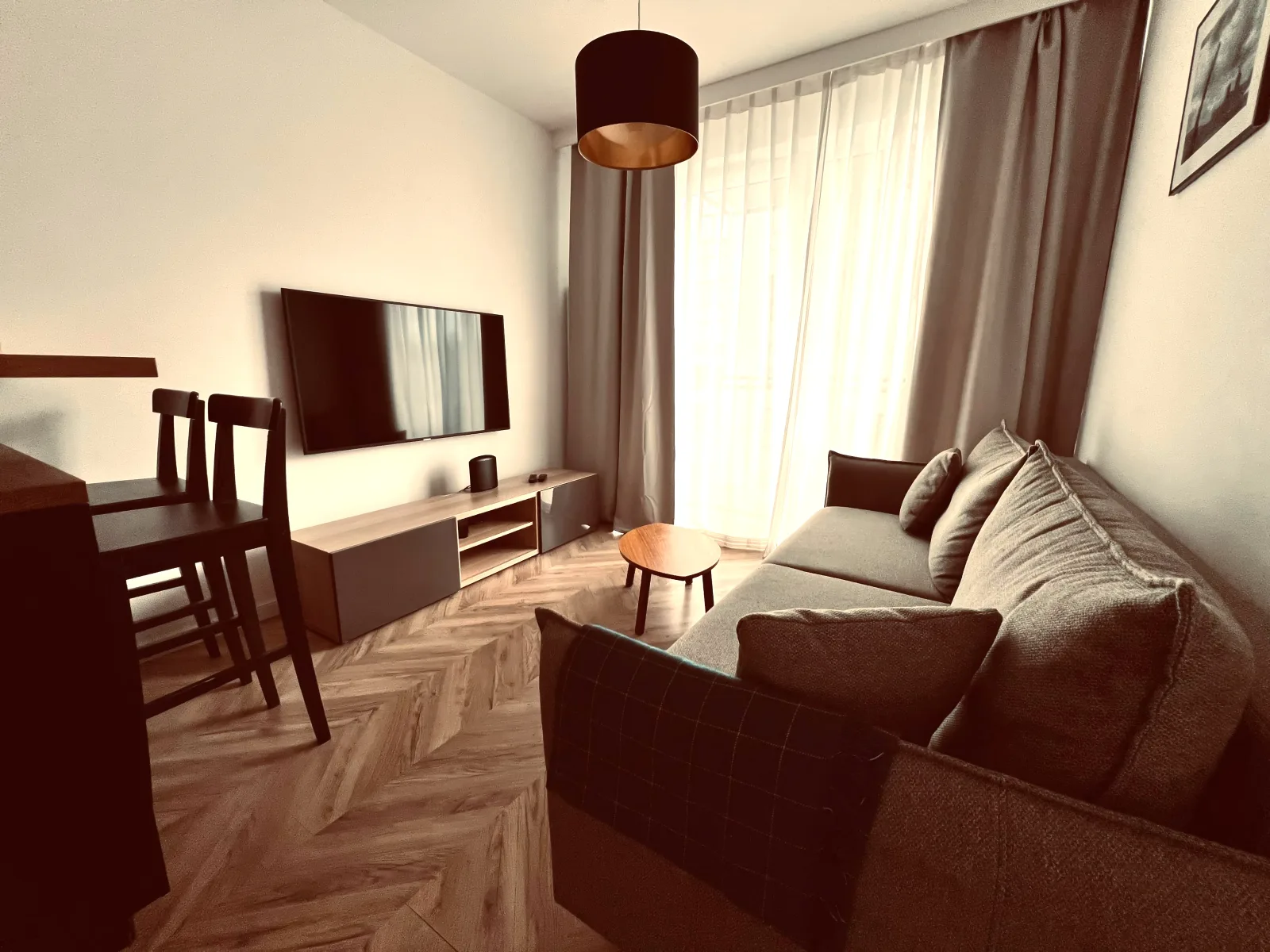
Apartament standard Bastion Wałowa
- 1 bedroom
- 2 beds
- 4 guests
- 36 m²
An apartment on Wałowa Street in the heart of Gdańsk — bedroom with a comfortable bed, fully equipped kitchen, shower bathroom. Underground garage, lift, fast Wi-Fi. No unnecessary extras — with an address that speaks for itself. Długi Targ 7 minutes on foot, Main Railway Station 350 metres, tram to Letnica and the beach 15 minutes. The best price-to-location ratio in the entire Bastion Wałowa complex.
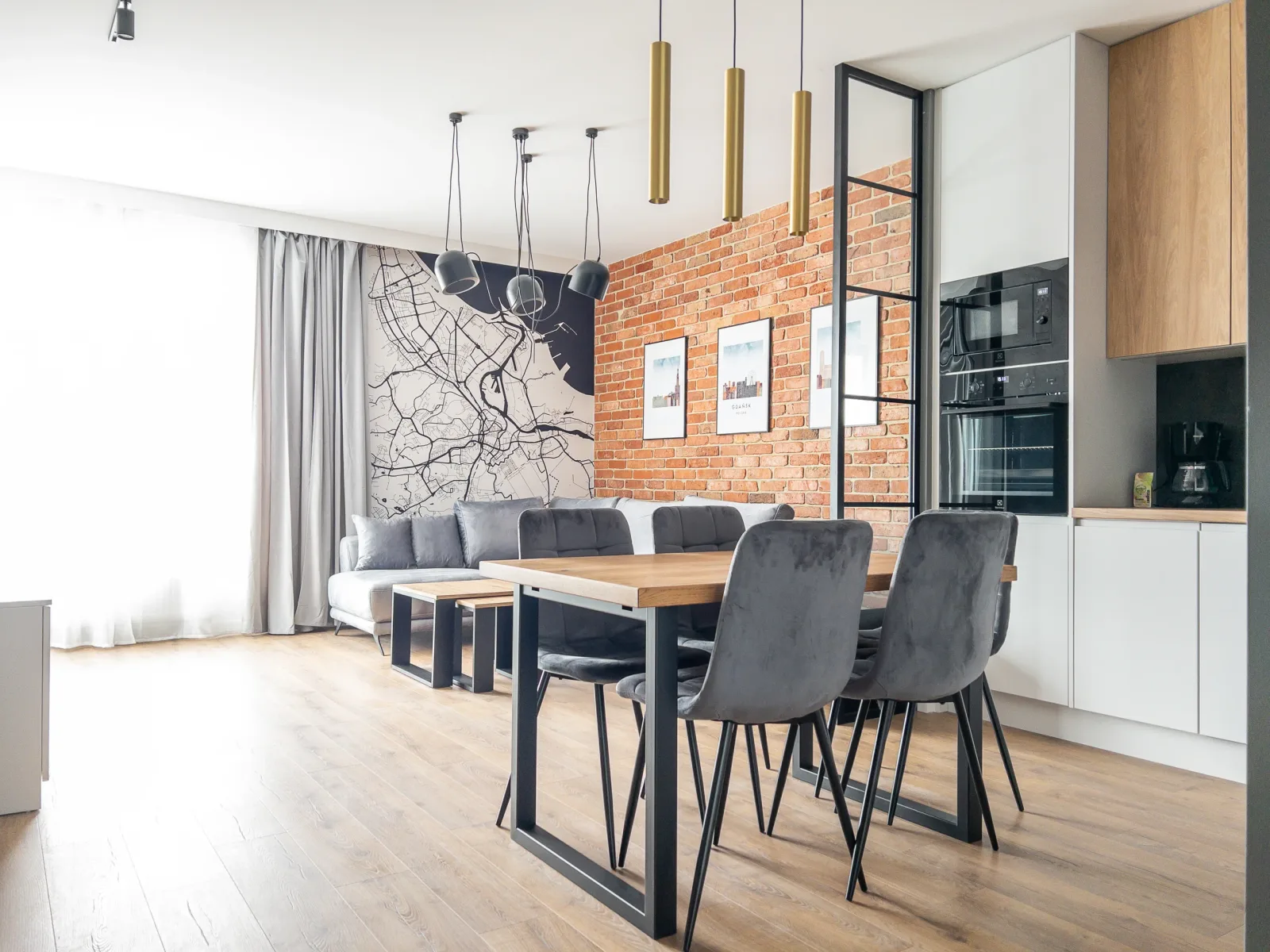
Apartament na dokach z dwiema sypialniami
- 2 bedrooms
- 3 beds
- 6 guests
- 68 m²
A loft-style two-bedroom apartment at DOKI — 68 m², two bathrooms, dedicated workspace, underground garage. Master bedroom with king-size bed, second bedroom with two beds (convertible to double on request). For 2–6 guests. ECS 10 minutes on foot, Montownia within walking distance, tram to the Old Town 15 minutes. Workspace by the window, Shipyard outside — remote work has the right address here.
Liked these topics?
Monthly guide to Gdańsk — events, new places, our apartments and their availability. No spam, just one email.
Related posts
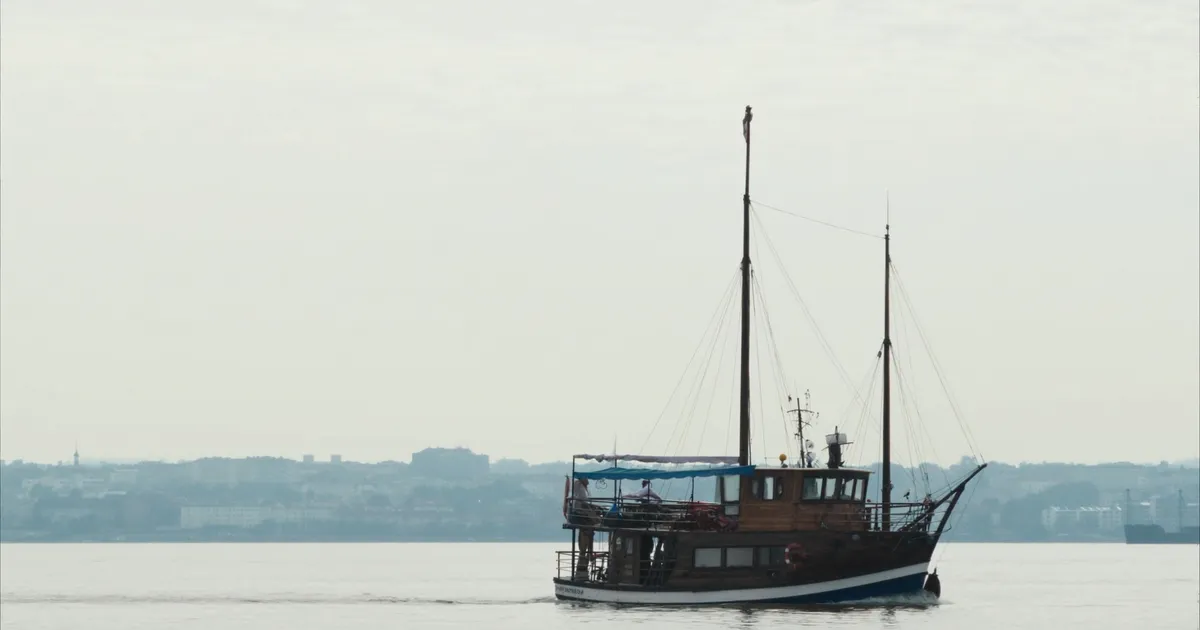
Cruise the Bay of Gdansk — Which One to Choose?
Gdansk water tour: Pirate galleon from Sopot vs. Westerplatte cruise from Gdansk — compare routes, prices, and sights for your perfect river adventure.
Sobieszewo Island — Wild Seals, Bird Paradise & Crowds-Free Beaches
See wild seals at Mewia Łacha Reserve, walk through Ptasi Raj and enjoy 11km of beach away from the center on Sobieszewo Island – what to see and how to get there in Gdansk, Poland.
Gdynia from Gdansk — how to get there and what to see in one day
Gdansk to Gdynia in 35 minutes by SKM: Kamienna Góra, Orłów Pier, Dar Pomorza & ORP Błyskawica. Plan a day trip without a car, step by step.