
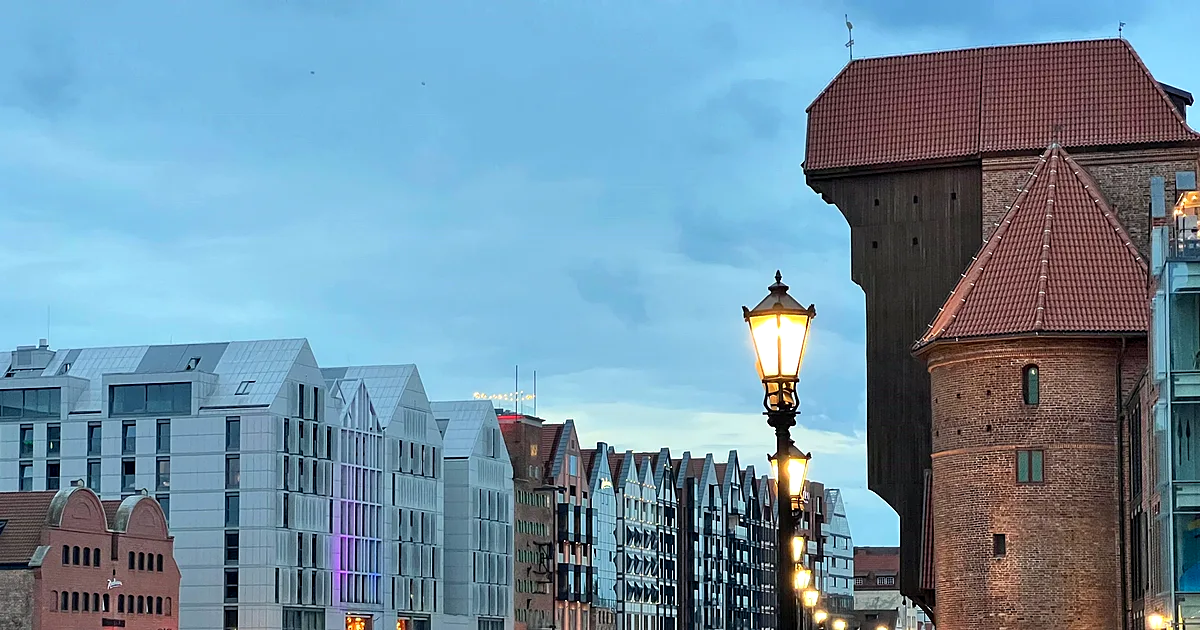
The Crane in Gdansk – What’s New After Renovation & How Much It Costs
The Crane in Gdansk after renovation: new multimedia exhibit with holograms, ticket prices, NMM hours, Ołowianka ferry, and a 2-hour sightseeing plan.
The Crane, a medieval port crane on the Motława river, was hidden behind scaffolding for years — but since spring 2024, you can enter it again, this time to experience an entirely new multimedia exhibition unlike anything before. This guide answers the real questions visitors ask before their trip: what you’ll see inside today, how much it costs and how long it takes, and how to connect the Crane with the rest of the National Maritime Museum’s branches across the river.
What is the Crane like today after the renovation?
The Crane stands on Szeroka Street, at Long Embankment — this is Main Town, not Old Town (in Gdańsk these are two separate, adjacent districts). The renovation, which closed the landmark to visitors for several years, ended on April 30, 2024 — the investment cost around 18 million złoty, funded mainly by Norwegian and EOG (Iceland, Liechtenstein, Norway) funds, with additional support from the Ministry of Culture and resources from the National Maritime Museum. As part of the work, the facades and roof were restored, the structure reinforced, and the interior fully adapted for a new permanent exhibition.
The result is a completely different museum than before the renovation — not just refreshed walls, but a new visitor concept based on multimedia rather than display cases with static exhibits. Today, more than two years after reopening, the Crane has become an established part of Gdańsk’s sightseeing program — no longer a novelty — but still surprises visitors who remember it from before the renovation.
How the Medieval Port Crane Worked
The Crane was built between 1442-1444 as the largest port crane in medieval Europe — and also served as a city water gate through which goods arrived from the waterfront. It stands nearly 30 meters high and could lift loads of up to 4 tons to a height of 11 meters, or 2 tons to 27 meters — enough to erect masts on ships docked along the Motława river.
The secret of its operation lay in two wooden treadwheels with a diameter of up to 6 meters — people entered their interiors and set the wheels in motion by walking, like in a giant treadmill. This same purely mechanical principle powered the winch for centuries. The Crane burned down in 1945, was rebuilt in subsequent years, and since the 1960s has served as an exhibition hall of the Maritime Museum — so what you see inside today is actually a second version of the same site: a reconstruction telling the story of the original.
What You’ll See Inside
The new permanent exhibition is titled Gold for Grain: The Maritime Power of Gdańsk and spans three floors and several halls — telling the story of Gdańsk’s port during its 17th-century “golden age,” the peak of grain trade that built the city’s fortune (the same trade we covered in our article about Granary Island).
The tour is guided by 3D moving holograms of figures linked to the old port — a Hanseatic merchant, a customs officer, and an innkeeper — enhanced with 3D mapping, panoramic screens, and interactive stations. You’ll see recreated interiors inspired by 17th-century paintings, including a customs chamber and a port tavern, as well as an original mechanism: a wooden treadwheel that actually powered the crane. This combination leaves even visitors who usually skip historical museums impressed.
The visit takes about one hour — allow a bit more if you want to explore each room thoroughly, or less if you’re moving quickly between floors.
Tickets and Hours
The prices below are from the official nmm.pl price list—treat them as approximate and check for updates before your visit, as museums adjust their pricing seasonally.
| Ticket | Regular | Reduced |
|---|---|---|
| The Crane alone | 26 zł | 19 zł |
| The Crane — Large Family Card | 18 zł | 13 zł |
| The Crane + Maritime Culture Centre (without interactive room) | 44 zł | 32 zł |
| Full package: Ołowianka + Sołdek + The Crane + OKM (without room) | 75 zł | 55 zł |
| Full package with interactive room | 97 zł | 73 zł |
Wednesdays are free entry days for the Crane — however, on this day the museum is open shorter, so free admission may not be worth it if you plan to explore at a relaxed pace all day. A group supervisor (one person per ten participants) pays a symbolic one-złoty fee.
Hours vary between locations—the Crane opens earlier than the main building at Ołowianka:
| Day | The Crane | Ołowianka / Sołdek / OKM |
|---|---|---|
| Mon–Tue | 10:00–18:00 | 11:00–18:00 |
| Wed | 13:00–18:00 (free entry) | 13:00–18:00 |
| Thu–Sun | 10:00–18:00 | 11:00–18:00 |
Ticket offices close, and the last admission to exhibits is possible 60 minutes before closing. The above hours are seasonal (current as of September 6, 2026)—after this date, check whether the schedule has changed.
NMM Branches and Combined Ticket
The Crane is just one of several Gdańsk branches of the National Maritime Museum, so before buying a ticket, it’s worth deciding how much time you really have:
- Ołowianka — the museum’s main headquarters, housed in three historic granaries on the island of the same name, featuring four floors of exhibitions on maritime history from the Middle Ages to the 20th century.
- Sołdek — a ship-museum moored at Ołowianka, the first built in post-war Poland and launched in 1948 as the first Polish coal carrier. You can explore it inside—engine room, galley, crew cabins.
- Ośrodek Kultury Morskiej (OKM) — an interactive branch near the Crane, a great choice for families; some exhibits have adjustable sound and light levels for sensory-sensitive guests.
A combined ticket makes sense if you plan to see more than just the crane—there’s only a few dozen zloty difference between a single ticket and one that includes Ołowianka and Sołdek, saving you from buying separate tickets at two different boxes.
Ferry across the Motława – the fastest route to Ołowianka
Between the pier by the Crane (and actually the Maritime Culture Centre right next to it) and Ołowianka Island runs the Motława passenger ferry — the current vessel has been in service since 1987, though a crossing at this location reportedly dates back to the 17th century. A one-way trip costs 4 zł, with ferries departing every 15 minutes and accommodating up to 50 passengers. This is definitely faster than taking the long detour on foot across the bridge on Stągiewnej Street.
The ferry operates seasonally and can be weather-dependent — check the current schedule and operating days directly at nmm.pl or at the Żuraw ticket office before your visit to avoid waiting unnecessarily at the pier.
How Much Time to Plan and What to Combine
- The Crane alone: about an hour.
- The Crane + ferry + Ołowianka (Museum + Sołdek): realistically 2–3 hours, if you’re not rushing through any of the exhibits.
- A full day along the Motława river: The Crane in the morning, lunch on Long Embankment, afternoon at Ołowianka and by the Sołdek.
The Crane naturally connects with the rest of sightseeing in the Main Town — it’s literally the last stop → Royal Route if you’re walking from Wyżynna Gate toward the water. The bridge right next to the Crane leads to → Granary Island — just a few minutes’ walk, a great way to end your afternoon with views of the river at sunset. In season, boats also depart from nearby Zielona Brama for → boat trips on the Bay of Gdańsk, which pass by the Crane before heading toward Westerplatte. If you’re still planning your entire stay, check out → Best Attractions in Gdansk for priorities on subsequent days.
Accessibility — with a stroller or wheelchair
The Crane (Żuraw) is a historic building with exhibits spread across several floors connected by stairs—official museum information does not clearly state whether there is an elevator or how accessible the site is for wheelchair users. If you’re traveling with limited mobility or a baby stroller, call the museum before your visit (+48 58 301 86 11) to ask about current accessibility options—safer than relying on it at the site. The Maritime Culture Centre, being newer and designed from scratch, usually works better for guests with strollers.
Where to Park and Stay Overnight
The Crane is located right in the heart of the Main Town, so driving there means entering the paid City Centre Parking Zone — if you’re leaving your car for the whole day, a covered parking lot is more convenient than searching for a spot along the waterfront.
Closest to The Crane, on the same side of the Motława river, is Bastion Wałowa — just a few minutes’ walk through the Main Town, without needing to take a tram. This is the ideal location from which you can reach The Crane, Granary Island, and the entire Royal Route on foot at any time of day, without planning your transport.
→ Bastion Wałowa District
→ View Mint Apartments near Motława
Planning a day focused on The Crane and the Motława waterfront? Contact our concierge with your stay dates, and we’ll select an apartment closest to the Main Town and advise you on connecting The Crane with the rest of the museum sites without unnecessary ferry waits. Contact the concierge.
Frequently asked questions
- How much does a ticket to the Crane in Gdansk cost?
- A regular ticket costs approximately 26 zł, a reduced ticket is 19 zł, and holders of the Large Family Card pay either 18 zł or 13 zł. On Wednesdays, entry to the Crane (Żuraw) is free, though the museum has shorter hours on that day, open from 13:00 to 18:00. Always check the current price list at nmm.pl before your visit, as rates change between seasons.
- How long does it take to visit the Crane (Żuraw)?
- The exhibition at the Crane (Żuraw), spread across three floors, takes about an hour to see. If you plan to take a ferry to Ołowianka and tour the main museum building along with the Sołdek ship, allow 2–3 hours for the entire visit.
- Is there a combined ticket for the Crane and the rest of the National Maritime Museum?
- Yes. The simplest option is the Crane plus the Maritime Culture Centre for 44 zł, 32 zł discounted. The full package including the main building on Ołowianka and the Sołdek ship costs 75 zł, 55 zł discounted without the interactive room, or 97 zł, 73 zł discounted with it. It’s worth it if you plan to see more than just the crane.
- How do I get from the Crane (Żuraw) to Ołowianka Island?
- The fastest option is the seasonal passenger ferry across the Motława river, running every 15 minutes and costing 4 zł one way—its stop is right by the Crane (Żuraw), next to the Maritime Culture Centre. Alternatively, you can take a longer walking route via the bridge on Stągiewnej Street if the ferry isn't operating or if you prefer to walk.
Help me book an apartment
The AI concierge matches an apartment to your plans — dates, party size, district. Replies in seconds.
Apartments that fit this stay
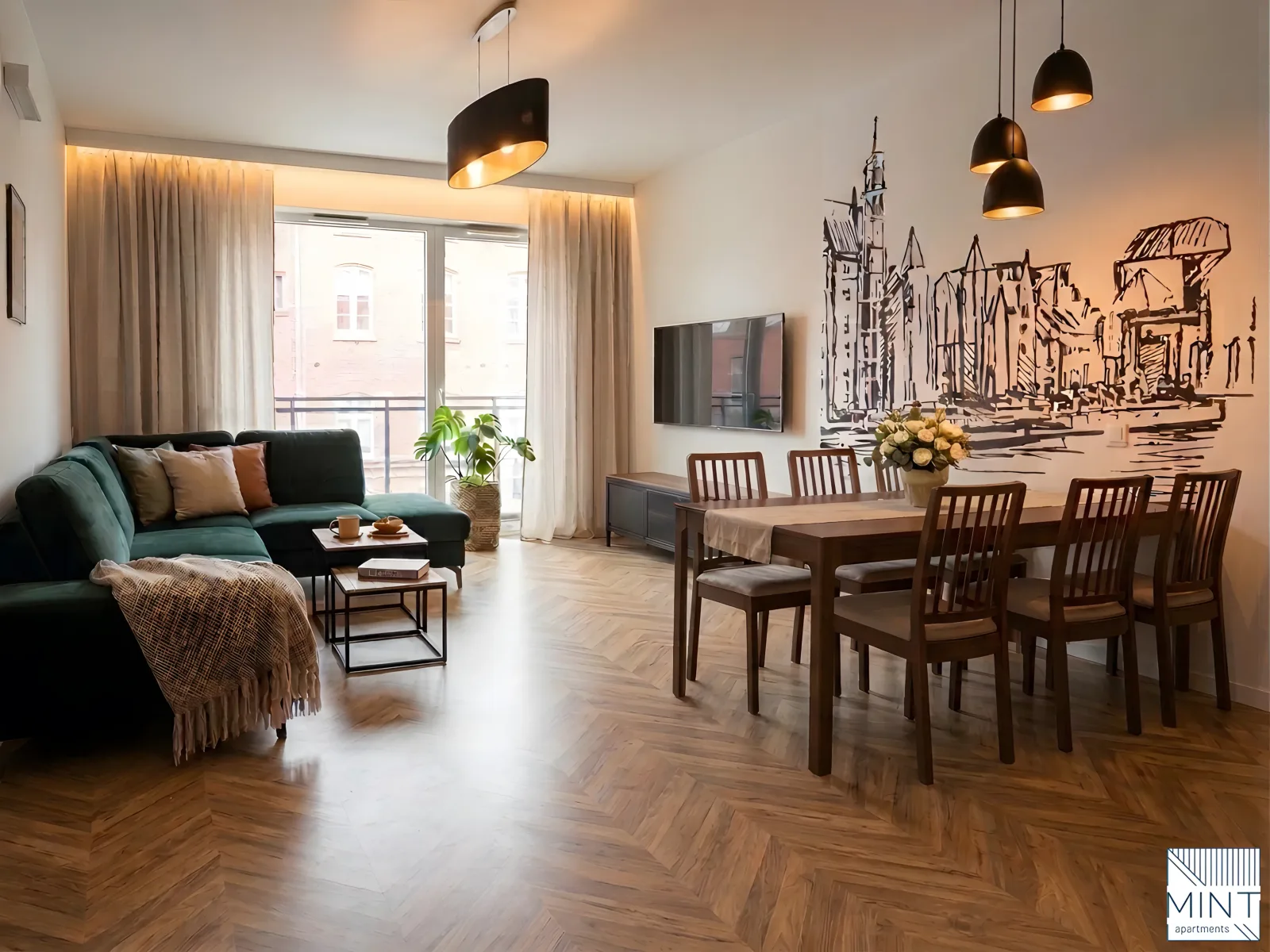
Apartament Bastion Wałowa z dwiema sypialniami
- 2 bedrooms
- 3 beds
- 6 guests
- 65 m²
A spacious two-bedroom apartment with two bathrooms and a balcony right in the heart of Gdańsk on Wałowa Street — 65 m² for up to 6 guests. Balcony overlooking Wałowa Street and the historic Śródmieście quarter. Długi Targ is 400 metres on foot. Fully equipped kitchen with coffee maker, Smart TV, fast Wi-Fi, washing machine and oven. Underground garage included. The largest Mint apartment in the Bastion Wałowa location — the top pick for families and groups of friends.
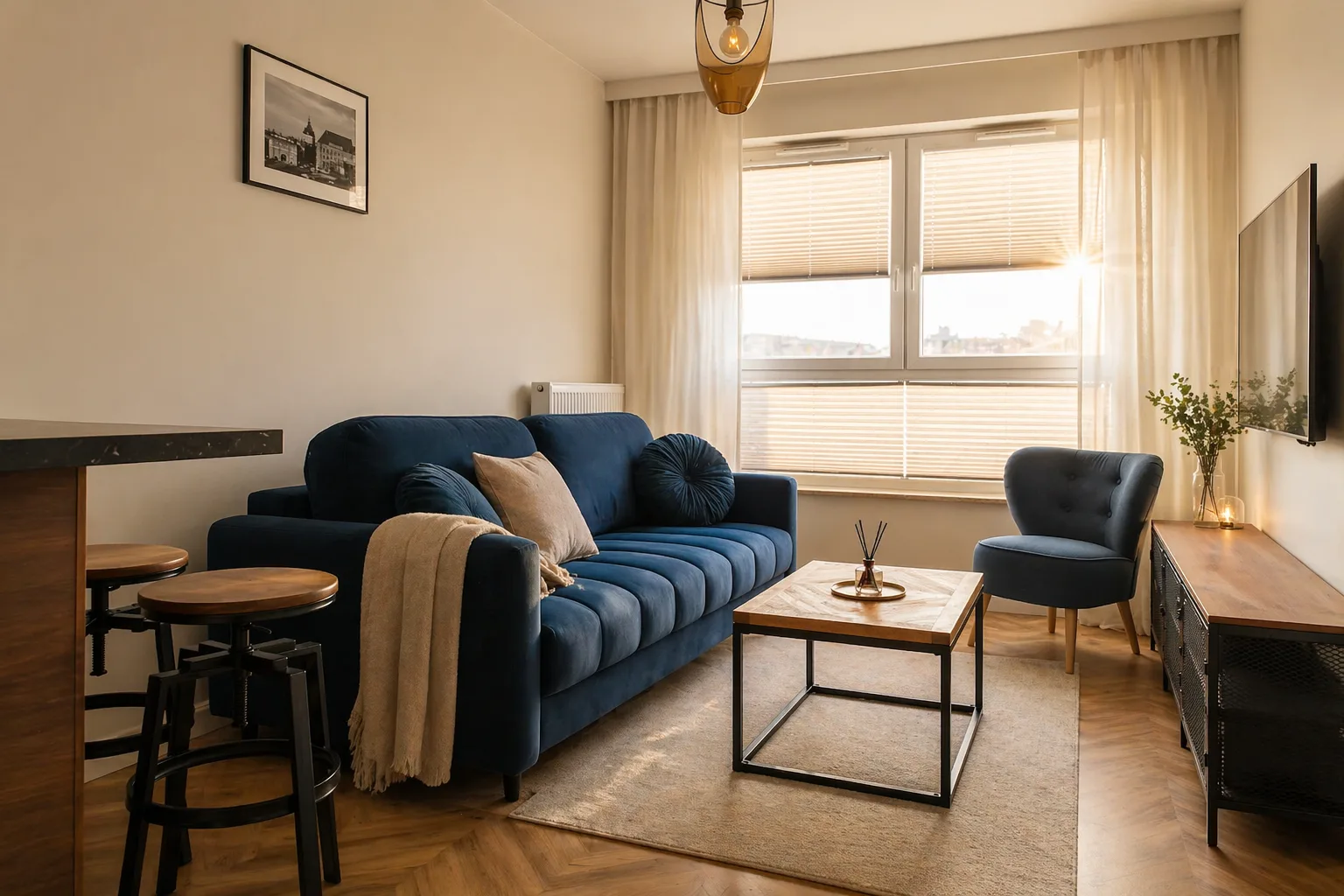
Apartament Suite Bastion Wałowa
- 1 bedroom
- 2 beds
- 4 guests
- 37 m²
A suite apartment right in the heart of Gdańsk on Wałowa Street — 37 m², bedroom with a king-size bed, fully equipped kitchen with coffee maker, fast Wi-Fi and Smart TV. 5 minutes' walk to the Old Town, 7 minutes to Długi Targ. Modern finish in the new wing of the Bastion Wałowa complex, lift and underground garage. Ideal for a couple or small family wanting quiet comfort in the historic centre of Gdańsk.
Liked these topics?
Monthly guide to Gdańsk — events, new places, our apartments and their availability. No spam, just one email.
Related posts
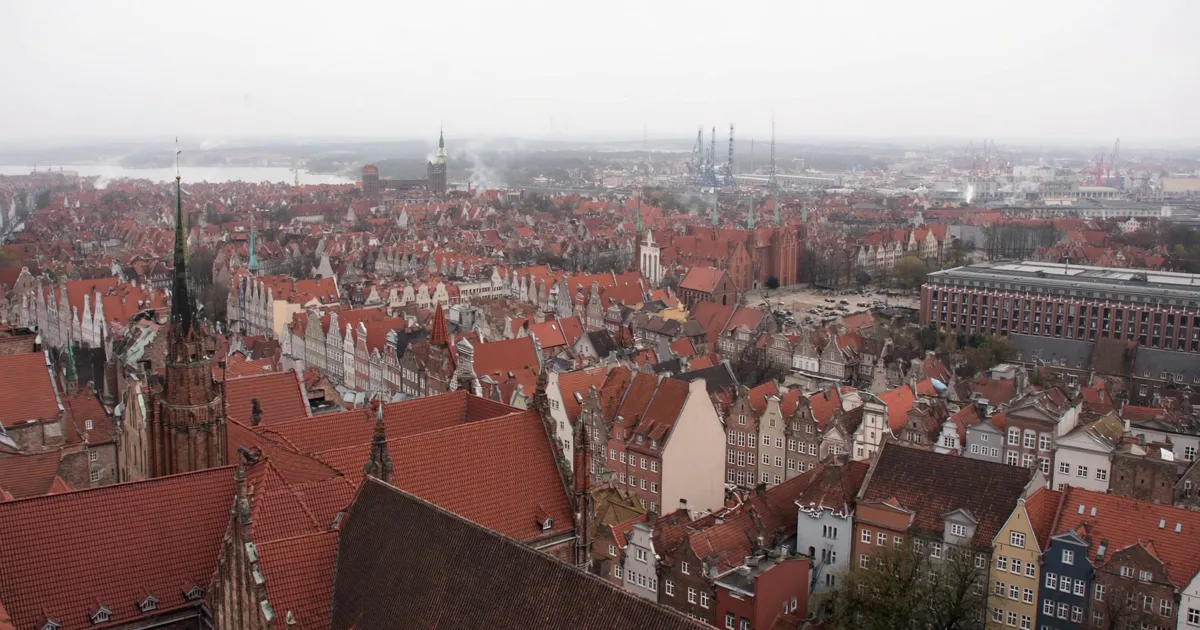
Gdansk’s St. Mary's Tower — 409 Steps, Prices, & Views
Entry to the Basilica of St. Mary in Gdansk: 409 steps, ticket prices, seasonal hours, and honest advice on who should skip it.
The Royal Trail in Gdansk — A Step-by-Step Walk
Trakt Królewski in Gdansk: step-by-step guide from Brama Wyżynna to Mariacka – distance, time & where to eat near Long Market and the Crane.
Gdansk Shakespeare Theatre — roof that opens in 3 minutes
The Crane (Żuraw) in Gdansk – the world’s only surviving medieval crane mechanism, dating back to 1601. Explore its history, Shakespeare performances by English actors, tickets, and why this landmark stands in Gdansk, Poland.