
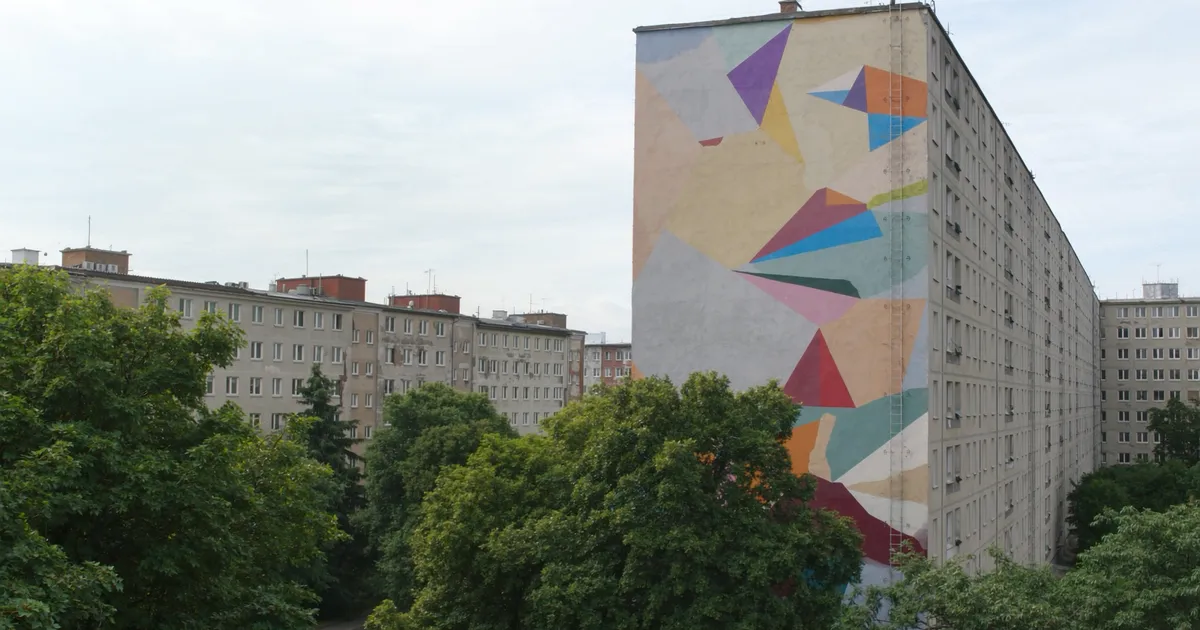
Murals of Zaspa Gdansk — how to explore alone: map, route, access
Discover how many murals Zaspa has, whether entry is free, and how to reach it from the center by tram or SKM—plus a walking route suitable for families with children and strollers.
Zaspa is one of those Gdańsk addresses you won’t find in any guidebook for the Main Town—but it regularly appears on lists of things to see in the city. Instead of Gothic tenements, there’s a massive 1970s–80s housing block, its upper walls adorned with dozens of large-scale murals that have turned the neighborhood into an open-air art gallery. This guide shows you how to plan your own walk: what this place is all about, how much it costs, how to get there, and how long to set aside.
What is Zaspa and Where Do the Dozens of Murals Come From?
Zaspa is a typical block housing estate in northern Gdansk, primarily built during the 1970s and 1980s. The first murals appeared here in 1997 as part of the celebrations for the millennium of Gdansk—about a dozen works on the upper walls of high-rise buildings. The idea returned in 2009 with the Monumental Art festival, which ran eight editions between 2009 and 2016—and it was these subsequent festivals that expanded the collection to its current scale. Although the festival no longer takes place, the murals remain on the estate, some of them periodically restored.
Today, we’re talking about dozens of large-scale murals scattered across the entire neighborhood—different sources cite slightly different numbers (between 58 and 60, depending on whether smaller entrance arrangements are included)—because the collection is alive: some works are renewed after years, and each new festival edition adds fresh pieces. Instead of trying to pin down an exact count, it’s better to approach Zaspa like a living gallery that keeps evolving.
The character of the place is unique—and that’s its greatest charm. This isn’t a museum or a closed exhibition area; it’s a normal residential neighborhood where people live, shop, and walk their dogs. The murals sit alongside clotheslines with drying laundry and local corner shops, which makes quite an impression on visitors used to tourist routes in the Main Town.
Is sightseeing free?
The short answer: self-guided walking is always free. Zaspa is a residential neighborhood, not a paid attraction with an entrance ticket — you walk the sidewalks and alleyways just like locals do, and view the murals from street level, without any restrictions or opening hours.
Paid tours are only offered by guides — and here it’s important to distinguish two things. Seasonal guided walks in Polish, organized during summer by local cultural institutions, are usually free but take place on specific days and times and require prior registration — spots are limited and the schedule is seasonal, so check current dates before your trip. Separate from this are private guides and local tour agencies that organize individual tours (e.g., in foreign languages or tailored to group requests) — these are paid services with prices set directly with the guide.
If you’re interested in context — who painted which mural and what’s the story behind it — consider downloading or buying a guidebook at the tourist information point. You won’t get lost without one, but you’ll miss some of the stories hidden behind the artwork.
How to get here by tram or SKM from the city center
The most convenient option from the city center is SKM — it takes about 10 minutes from Gdańsk Główny to Gdańsk Zaspa station, and trains run frequently throughout the day, so you don’t need to plan with a large time buffer. From the station, it’s usually just a few to ten minutes’ walk into the neighborhood toward the first murals.
An alternative is the tram — several lines serve the Zaspa area from different parts of the city, which can be more convenient if you’re staying in a district without direct SKM access. In both cases, it’s easiest to check real-time connections and the next departure right before leaving using the Jakdojade app — schedules and line numbers sometimes change.
One practical note for 2026: pedestrian bridge reconstruction is underway near Zaspa along al. Jana Pawła II and Rzeczpospolitej — a multi-phase project with an expected completion in 2027. In practice, this means the walk from the station or stop to the neighborhood itself may temporarily require detours or temporary crossings. Nothing that would ruin your trip, but it’s worth allowing a few extra minutes and checking current pedestrian routes before departure instead of relying on memory of old paths.
Learn more about getting around Gdansk without a car — including SKM, trams, and city bikes — in our guide → Transport in Gdansk: Tram, SKM, Bike.
Independent Route — Where to Start
The simplest way to begin is not looking for one “correct” entrance into the neighborhood, but choosing a single landmark and walking from it in a loop. A proven approach is to start near SKM Gdańsk Zaspa station and the cultural club on Pilotów Street—this is where organized walks often gather, making it easy to orient yourself.
From this point, murals are spread out radially across the entire neighborhood—you won’t find one linear route, so realistically you’ll plan a walk in an irregular loop, turning wherever you spot another colorful wall in the distance. This works well without a map, but if you want to make sure you don’t miss specific pieces, it’s worth checking the collection map available on the official website of the Zaspa Street Art Museum and marking a few priority stops.
Practical tip: Go without a rigid plan for order. Zaspa rewards wanderers and spontaneous discoveries more than ticking off a list one by one—some of the best murals are tucked away in the depths of the neighborhood, far from main paths, and easier to find by turning into side streets than sticking to a single route.
How Long Does a Walk Take
A leisurely walk along the main routes takes 1.5–2 hours. This is enough time to see most of the recognizable works and soak in the neighborhood’s general atmosphere, without rushing.
If you enjoy taking lots of photos, exploring side streets, and resting along the way, plan for 2.5–3 hours. This is a realistic timeframe for a more thorough exploration, including a coffee break at one of the local cafes. The Zaspa district has no opening hours or ticket office, so you can schedule your walk at any time of day—your only limits are your own time and the weather.
Is it worth going with a child and stroller?
Absolutely yes — this is one of the few walks in Gdansk where children get engaged naturally, without encouragement. The large, colorful murals on block walls attract attention far more than another tenement house in the Main Town, and the stroll easily turns into a simple game—searching for animals on the walls, counting favorite colors, guessing what each image depicts.
The neighborhood is flat and well-suited for strollers — sidewalks are wide, though sometimes residential rather than pedestrianized, so you may encounter uneven paving stones in places. It’s worth planning your route to include one of the local playgrounds—these make natural stops for little ones to rest between mural viewing sessions. For more ideas on activities suitable for different age groups and alternatives for bad weather, check out our guide → Gdansk with Children.
When is the best light for photos
Murals look their best in afternoon hours, when the sun is lower and not shining directly onto the wall—harsh midday sunlight flattens colors and creates strong shadows that make it difficult to capture the entire mural surface. Overcast, diffused days also work surprisingly well—the colors appear more saturated than under full sun.
If you want photos without crowds in the frame, come early in the morning on weekdays—afternoons and weekends see organized groups and other tourists with cameras flocking to Zaspa, so it’s easier to find a quiet street in front of your favorite mural earlier.
What else to see near the stadium
Zaspa historically borders Letnica—the district where the stadium (Polsat Plus Arena) stands today and which is just a few minutes by tram from the city beach in Brzeźno. This means that if you’re staying near the stadium and the beach, the murals in Zaspa are practically next door rather than a separate trip across town—traveling by tram or SKM takes just a dozen minutes depending on your starting point.
This is great news for guests visiting Gdańsk for a match or concert at the stadium who are looking for things to do with their time. Learn more about the stadium and its surroundings in our guide → Match and Concert at the Stadium in Gdansk. A similar off-the-beaten-path vibe can be found in nearby Oliwa, with its park and zoo—ideal if you’re planning a longer stay. Consider combining both walks into one day outside the Main Town, as we describe in our guide → Oliwa and Wrzeszcz — a Walk Outside the Center.
Where to stay so this plan makes sense
Our Seaside Letnica apartment is located right in this part of Gdansk — close to the beach and stadium, yet within reasonable reach of Zaspa without needing to drive across the entire city. It’s a convenient base if your day includes strolling among murals as well as an evening at the stadium or on the beach. Each apartment has its own parking space and self-check-in 24/7 via electronic lock (Tedee, in some units Nuki), so you don’t have to wait for someone with keys after a walk.
→ View the location of Seaside Letnica
Planning a day in Zaspa followed by an evening at the stadium or on the beach in Letnica? Write to our concierge — we’ll help you plan the best route and which Seaside apartment will be the most convenient starting point.
Frequently asked questions
- Is visiting the Zaspa murals free of charge?
- Yes – walking around the neighborhood on your own is completely free. The murals are painted on the upper walls of ordinary residential blocks, and the area is public space with no tickets or gates. Paid guided tours are only available as private, individually booked experiences (e.g., in foreign languages). Seasonal walks organized in Polish are usually free but require prior registration.
- How to get to Zaspa from the center of Gdansk?
- The most convenient option is the SKM train to Gdańsk Zaspa station— it's about a 10-minute ride from Gdańsk Główny main station. Alternatively, trams run in the vicinity of the neighborhood. In the area around Zaspa, construction has been ongoing for some time on the reconstruction of the bridge over al. Jana Pawła II, so walking access from the station may temporarily require a detour— check the current route in the Jakdojade app before departing.
- How long does it take to visit the murals on Zaspa?
- A walk along the main routes takes 1.5–2 hours at a relaxed pace. If you want to see most of the collection, take photos, and rest on benches along the way, allow 2.5–3 hours. This is a stroll through a real residential neighborhood, not a closed museum route, so the time depends mostly on you.
- Is it worth visiting Zaspa with children?
- Yes – it’s one of the few walks in Gdansk, Poland, that kids enjoy just as much as adults, because the colorful, large-scale murals naturally draw attention and offer a simple game of spotting motifs. The area is flat, so strollers are no problem, though part of the route follows residential sidewalks rather than dedicated pathways – it’s worth planning breaks at playgrounds if you come across them along the way.
Help me book an apartment
The AI concierge matches an apartment to your plans — dates, party size, district. Replies in seconds.
Apartments that fit this stay
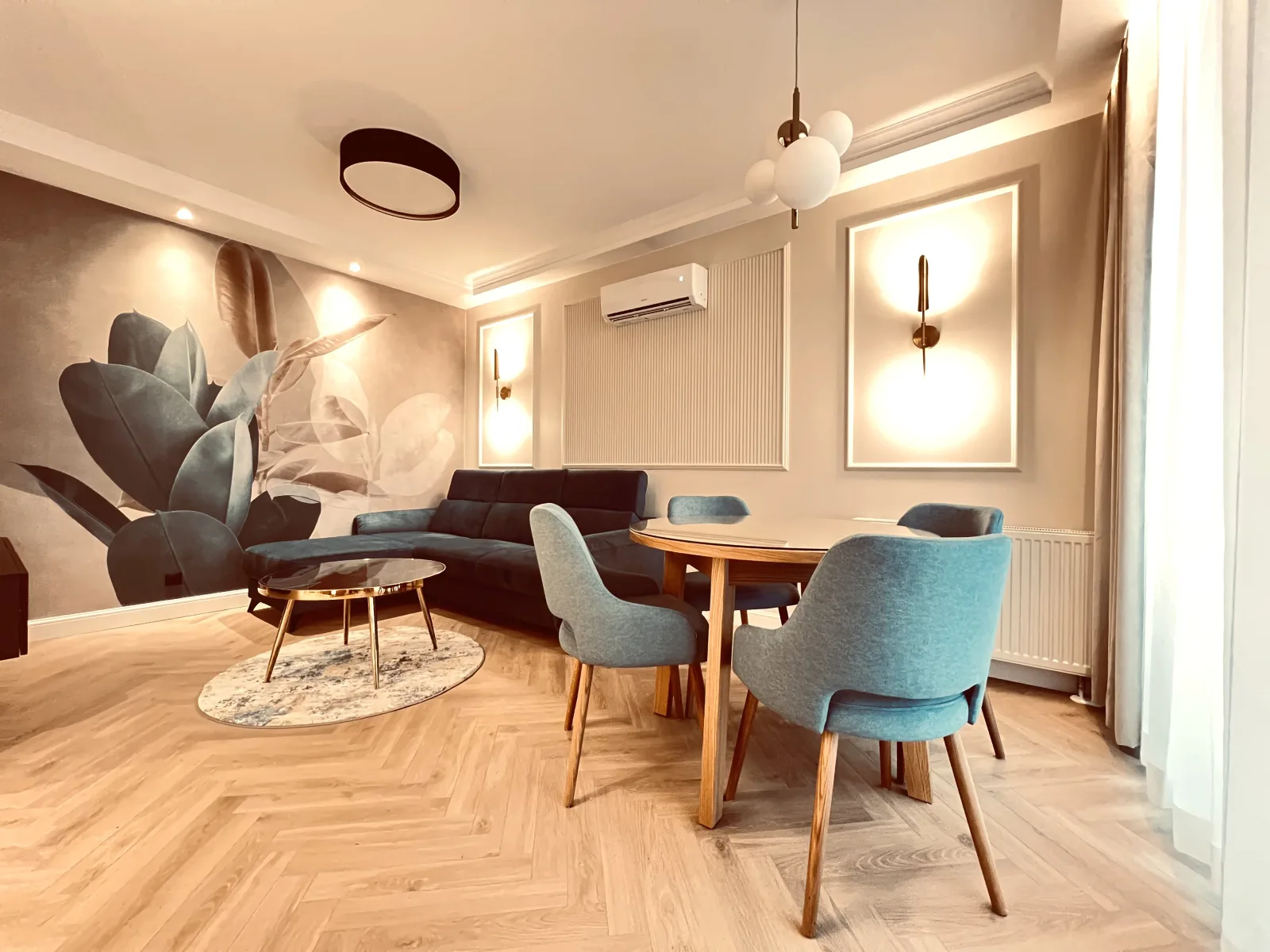
Luksusowy apartament pomiędzy Stocznią a morzem
- 1 bedroom
- 2 beds
- 4 guests
- 47 m²
An apartment between the Gdańsk Shipyard and the sea in Letnica — 47 m², air conditioning, balcony, Caffessimo espresso maker and underground garage. Shipyard 10 minutes on foot, Brzeźno beach 15 minutes, tram to the Old Town 15 minutes. Premium finish, Smart TV, fast Wi-Fi, washing machine, fully equipped kitchen. For 2–4 guests. An address that plays both sides — history and the sea at the same distance.
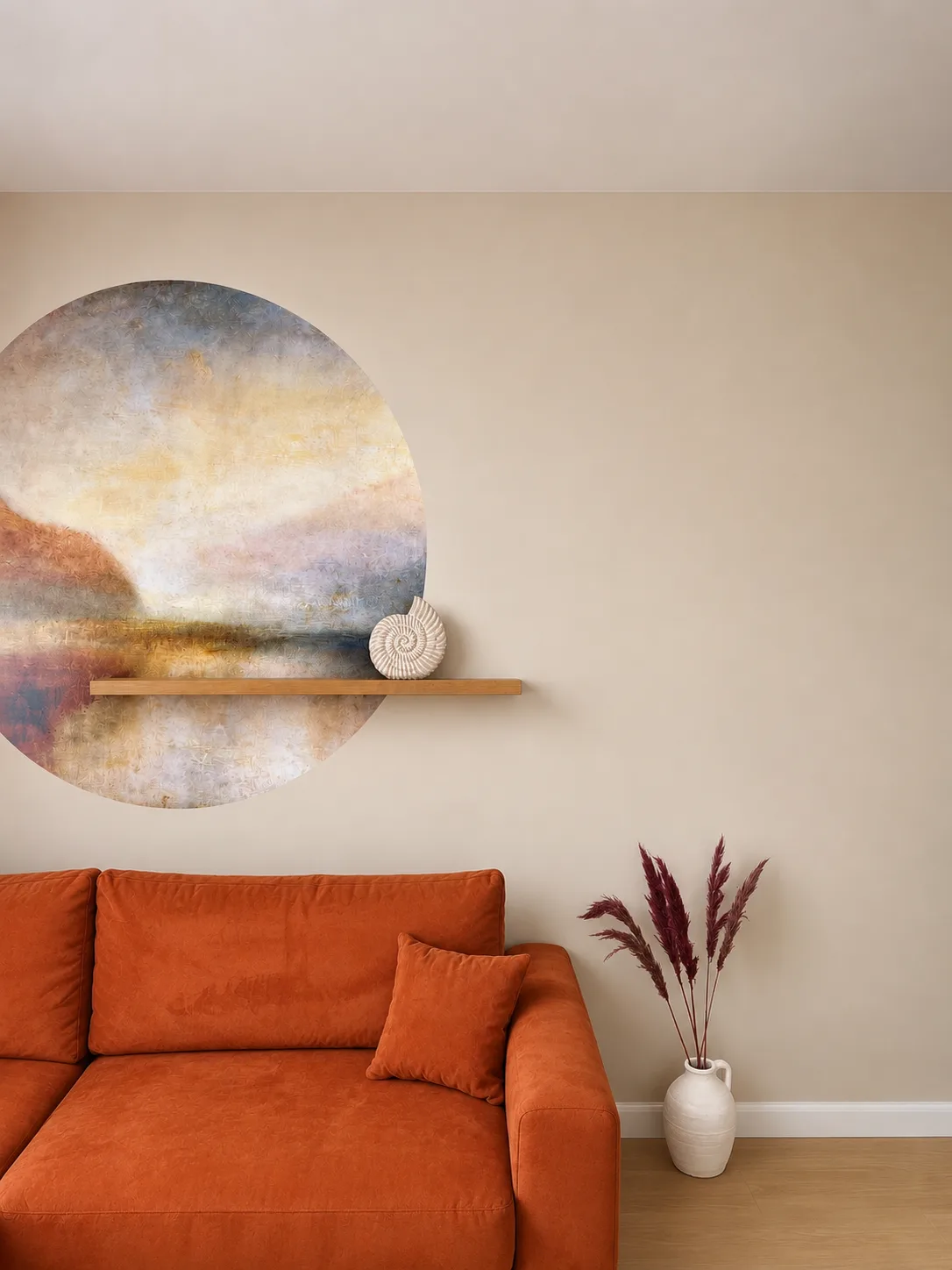
Mint Apartments Seaside
- 1 bedroom
- 2 beds
- 4 guests
- 48 m²
Mint Apartments Seaside — a premium apartment in the seaside part of Gdańsk. 5 minutes from Brzeźno beach, 5-15 minutes from Polsat Plus Arena, 15-20 minutes by tram to the Old Town. Full kitchen, balcony, parking. Ideal for family, business or event stays.
.webp)
Komfortowy apartament przy plaży
- 1 bedroom
- 2 beds
- 4 guests
- 32 m²
A comfortable apartment in Letnica with air conditioning — 32 m², bedroom with a cosy bed, fully equipped kitchen, fast Wi-Fi and Smart TV. To the Brzeźno beach: 10 minutes' walk. To Galeria Metropolia shopping centre: 5 minutes on foot. To Polsat Plus Arena: 10 minutes' walk. Air conditioning is the differentiator here — rare at this price point in Gdańsk, and invaluable on a hot August afternoon. Parking and garage on-site. Perfect for a couple or small family wanting a seaside base with beach, shopping and the stadium all within easy reach.
Liked these topics?
Monthly guide to Gdańsk — events, new places, our apartments and their availability. No spam, just one email.
Related posts
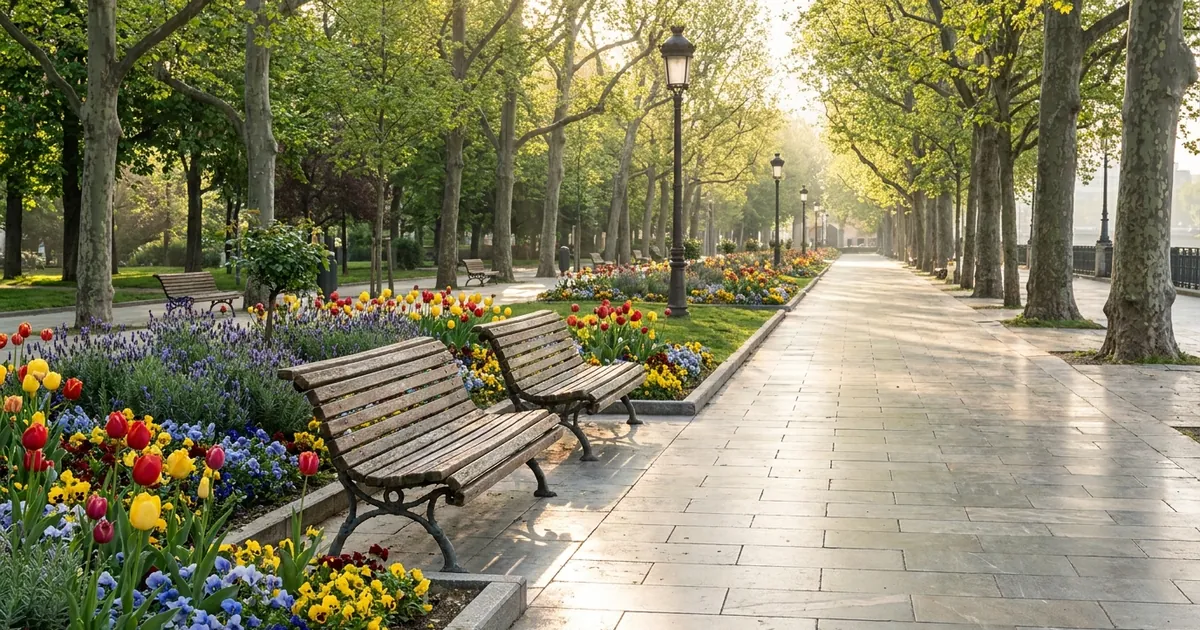
Gdansk for Seniors — Exploring at a Leisurely Pace
Discover a relaxed way to explore Gdansk with flat routes, benches every few hundred meters, guided minibus tours, and apartments with elevators. Plan your stress-free sightseeing in Poland.
Romantic Weekend in Gdansk — A Couple’s Guide
Romantic weekend in Gdansk, Poland: sunset over the Motława river, dinner with a view, walk along Mariacka, breakfast for two in your apartment – hour by hour.
Where to Stay in Gdansk — Neighbourhood Guide 2026
Seaside Letnica, Bastion Wałowa, or DOKI? Choosing the right neighbourhood in Gdansk defines the character of your stay. We compare the 3 districts where we have apartments.